


















So, how can I plant successfully around a pool? Easy, there are just a few limitations…
How to Choose Plants for Around Your Pool?
Here’s how we go about designing pool gardens.
Firstly consider your orientation to the sun you want to have the lower angle winter sun warming the pool so the backdrop plants should be on the southern side of the pool.
Think in Themes
Secondly, select the theme and stick with it. In warmer zones, pools are tropical fixtures so leafy plants reinforce the theme. Use Pandanus, Giant Strelitzia, Cordylines, Crotons and Gingers. Southern zones may be more formally styled so go with clipped hedges and feature trees with understorey grasses. Think Lilly Pilly, evergreen trees and Agapanthus species. Just make sure your plants don’t drop leaves constantly. Fine leaves are easily captured by skimmers but if they sink and vacuuming is irregular, it looks untidy. Avoid flowering trees due to the heavy fall in the season, unless you like the appearance of floaters and consider it a small seasonal inconvenience. Don’t mix themes! Avoid fine leaves like Melaleuca.
Next, think about the focal points when viewed from different angles and place your wow plants there. Install up-lights for night appeal. Keep the harmony, simplicity and repetition thing going in the back of your mind.
The ground becomes saturated, the exchange of gasses (carbon dioxide and oxygen) is compromised, roots die and the foliage cant get enough nutrients (or surprisingly water) from the soil. Microbes, so necessary for plant health, can't survive and so the spiral of death begins.

Are Chlorine and Salt a Problem for Plants?
Any problems with pool gardening relate to an excess of water rather than chlorine or salt levels.
Chlorine levels of about 2ppm necessary to eliminate bacteria in the average pool are way below the 20,000ppm found in the ocean. The splashing of chlorinated water may damage plants with thin leaves.
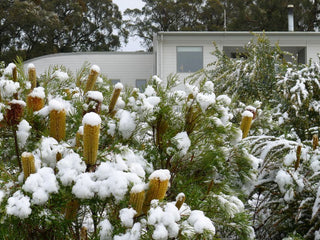
Salt may become a problem for plants that are sensitive to high levels. General pool salt levels should be about 3000ppm whereas salt intolerance may start to be a problem at 2000ppm. You can use plants that thrive in coastal locations, ones that have grey foliage, furry or leathery leaves resistant to salt spray. Included plants are Coastal Banksia, Westringia, Agave, Coprosma, Metrosideros, Myoporium, Scaveolea, Strelitzia, Bougainvillea and Frangipani.

If you think your plants are being slowly killed by pool water, install a strip drain around the perimeter and run this to an approved waste.
Check the soil moisture level to see how wet it is throughout the daily and monthly cycles before and after strip drain installation. When it comes to planting requirements, just moist is just right ( the exception being succulents)!

Think About Maintenance When You Choose Poolside Plants
In considerations about poolside plantings, think about the maintenance issues- do the plants have small leaves which continually drop and clog the filter? Are the plants deciduous, losing all leaves in Autumn? Will the larger plants have destructive roots? Melaleucas, Ficus and bamboos should not be planted near pools. Palms may damage piping, pool coping and even the shell if insufficient room is provided for trunk and root expansion.
Here are our plant choices for different landscape styles-
- Tropical style - Strelitzia Nicolai, Strelitzia reginae, Croton, Cordyline species, Philodendron Xanadu, Liriope, Ixora spp, Raphis, Rhoeo, Carissa Desert Star and Ficus Green Island (shrub).
- Native style - Westringea, Backhousia myrtifolia, Breynia, Babingtonia, Lomandra spp, Syzygium
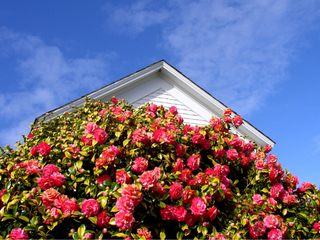
- Formal – Acmena Allyn Magic, Agapanthus, Buxus, Camellia, Carissa Desert Star Cuphea, Euonymus, Gardenia, Loropetalum, Murraya, Michellia, Photinia, Star Jasmine, Syzygium species
- Succulent – all of them provided always that the drainage is excellent. Provide intercept drains, mound with sandy soils and allow them to dry out regularly.