





















More on: Is my pot too small or too big for my plant?
We are often asked when is it best to re-pot. "Has my plant outgrown its container?"
Once the plant reaches the stage where there is a lot of roots in the pot, it is hard for it to continue to grow at it's optimum. You might start to see smaller new leaves form deficiencies or a mass of foliage that looks unbalanced or roots that are starting to circle the container.
Plants held in small containers for too long can fail to flourish (exception succulents for example or Bonsai ), so consider advancing your plants on when the time is right.
After a while, soil tends to slump and have a more muddy texture which means it can sometimes stay too wet and not drain very well. The roots can also become so compacted in the pot there is very little potting mix left and it is hard to keep the plant well watered. If your plant is exhibiting one or more of these signs it might be time to re-pot.

First up, what sizes are plants sold in? In Australia, the common sizes are-
- Tubes- the diameter is 40-50mm (approx 2 inches)
- 125mm pot - the diameter is 125mm ( approx 5 inches)
- 140mm pot - the diameter is 140mm ( approx 6 inches)
- 170mm pot - the diameter is 170mm ( approx 7 inches)
- 200mm pot - the diameter is 200mm ( approx 8 inches)
- 250mm pot - the diameter is 250mm ( approx 10 inches)
- 300mm pot - the diameter is 300mm ( approx 12 inches)
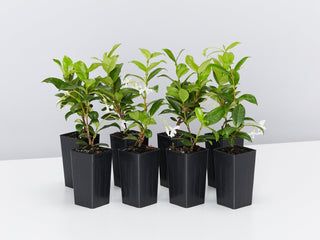
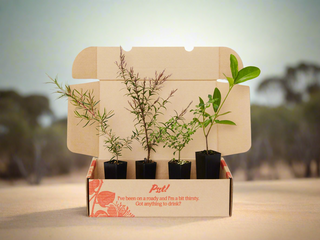
We sell "Tubestock", so what size is it?
It is simply a small pot of 42mm, 50mm or 85mm.
We hold our stock longer to make sure they are well rooted and ready to plant in the next size pot or straight into your garden. When you receive your small pot (tube) they are perfectly fine to be planted into the garden or potted in a 125mm to 200mm pot.
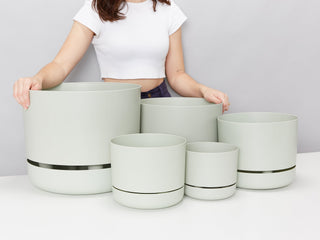
For any sized plant that needs re-potting, we recommend shifting to a pot around 2- 4 inches larger in diameter. This gives your plant enough space for new root growth without causing shock. A good way to measure is if a few of your fingers fit between the old pot and the new one. If you're still unsure of what pot to choose read more here.
Fresh soil and planting into a larger pot means that:
- Fresh potting mix will generally have better air filled porosity (more gaps between soil particles) which allows more oxygen which is helpful for root development.
- Also means that you can give it a fresh dose of fertilizer that is mixed in and throughout the pot.
- The benefit is, that it gives your plant the best conditions to have another growth spurt - Fresh potting mix, fertilizer and moisture.
When to pot?
If you are happy with the way your plant is looking and coping then it is perfectly fine to leave it in that pot. If it seems to be struggling, getting disease more often and hard to keep the moisture up to it, then a fresh pot and soil is sometimes all it needs for a pep up.
Plants will survive surprisingly well in pots provided that you don't let them dry out. Depending on the species, you can keep your new plants in pots indefinitely (think Bonsai), but they will always do better in the world's largest pot, the earth.
Observe your plants and judge when it's time to re-pot.
How to re-pot?
What you'll need:
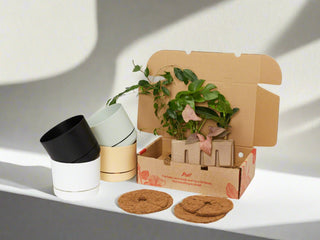
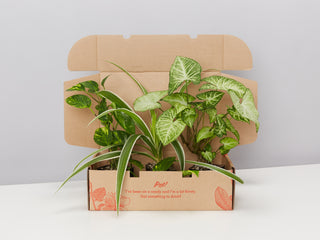
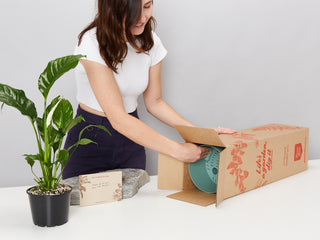
| Plants in a Box cardboard box (unfolded and laid out to catch the soil) |
| Your houseplant (obviously) |
| Your new planter (be mindful of size) |
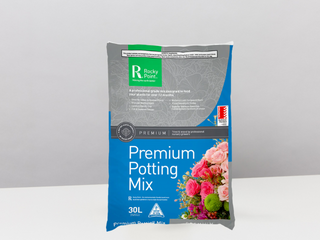
| Fresh high quality organic potting mix |
| Watering can |
Step-by-step guide:
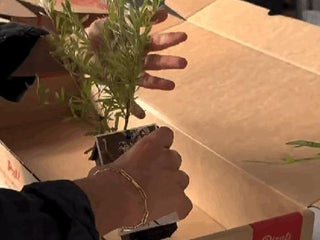
Have your next size pot ready with first-class potting mix (don't scrimp here!). Upend the existing plant, tap the container lip on a hard surface to slide the rootball out.
Part fill the new pot with potting mix and place the plant in the new container. The top of the old root ball should be the new finished level (ie don't bury the plant any deeper!). Allow space at the top of the soil for water to pool. Add fertiliser to manufacturer's recommendations and water well for the first time.
Some plants resent repotting, preferring to stay put. This may have more to do with water levels where a root bound plant has occupied all the available space leaving little room for moisture. Succulents fall into this category.